AI Model Families: Claude, GPT, Gemini, and the Open Ones
Who's who in neural networks - in plain terms, no benchmarks
Language model families in plain English: what makes Claude, GPT, Gemini, and the open Llama, Qwen, Mistral, DeepSeek strong. Closed vs. open - what to pick for the job.
What a model family means in plain terms
Language models aren’t one magic brain for everyone. Think of them as a few different auto-repair schools. They all fix cars, but each has its own style. Some are obsessed with precision and order. Some will take on anything. Some are the best at fiddling with images and video. And some are garage tinkerers you can haul home and tweak however you like.
These “schools” are exactly what we mean by families A model family is a lineup of models from a single developer, united by a shared temperament, architecture, and approach. Inside a family there are smaller versions (fast, cheap) and bigger ones (smart, pricey). . At a high level there are four players. They’re worth knowing on sight: Claude, GPT, Gemini, and the big motley crew of open models.
Why a beginner should understand model families
The first time you step into the AI world, you drown in names. Every week there’s a “new best model,” bloggers wave charts around, and it feels like you have to relearn everything right now. Relax - it’s a trap. Here’s what a level-headed look at families gives you.
- You’ll understand who to go to for which job - and stop forcing one model into territory where another is stronger.
- You’ll read the news without panicking: a new version is the same school, just a little smarter.
- You’ll figure out where you have to pay and where you can go free: closed ones charge for access, open ones live on your machine.
- You’ll stop falling for the “number one in the world” marketing. There’s no single champion - the market split into niches long ago.
The most common beginner mistake is picking a model by how loud the headline is. You should pick by your own task instead. Text? Code? Images? Privacy? Each of those points to a different answer.
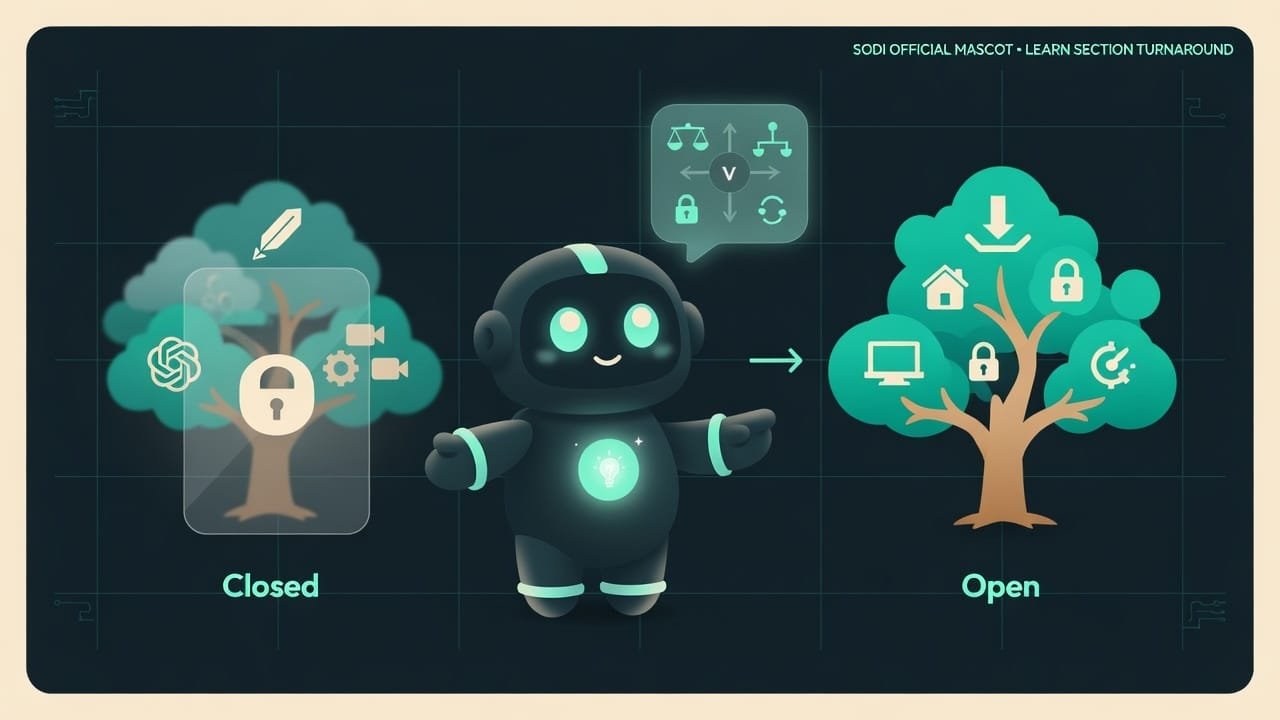
Closed vs. open models: the main divide
Before we dig into temperaments, get the single most important fork straight. All models split into two camps. This divide matters more than any benchmark.
- Access through a website or an
API , with the model itself hidden away on the company's servers. - Up and running in a minute: log in, type, get an answer. Nothing to install.
- Usually paid (subscription or pay-per-volume), but stable and free of setup hassle.
- This camp includes Claude, GPT, Gemini.
- The model is a file you can actually download and run on your own computer or server.
- Essentially free: you only pay for hardware and electricity.
- Full control and privacy - your data doesn't leak into someone else's cloud.
- This camp includes Llama, Qwen, Mistral, DeepSeek, and others.
How Claude, GPT, Gemini, and open models differ
Now let’s run through the main players. Keep in mind: this is a generalized temperament, not a verdict. On a specific task the order can easily flip.
Claude from Anthropic - the meticulous one that writes and codes beautifully
Anthropic Anthropic is the company that develops the Claude family, with an emphasis on the safety and predictability of its models. makes Claude. The family is closed. What’s it known for? Clean, lively text and code, a calm and thoughtful tone, the ability to hold long documents in its head and follow instructions carefully without losing the thread. If you need an assistant that doesn’t make stuff up and writes well, this is a natural fit. Inside there are lighter versions (fast and cheap) and heavier ones (the smartest).
GPT from OpenAI - the jack-of-all-trades
OpenAI OpenAI is the company that develops the GPT family and the ChatGPT service, one of the best-known names in AI. makes GPT (and, on top of it, the ChatGPT service). Also a closed family. Its trump card is breadth and ecosystem: a huge community, tons of ready-made integrations and tools around it. A solid all-rounder, and the easiest one to find a ready recipe or tutorial for. Why? Literally everyone uses it.
Gemini from Google - the multimedia type and an insider in the Google ecosystem
Google makes Gemini. A closed family built for multimodality - working not just with text but with images, audio, and video all in one. Plus tight integration with Google services: search, docs, mail. Is your task all about “understanding an image or video,” and do you live in the Google ecosystem? Then it’s a handy pick.
Open models - garage tinkerers you take home
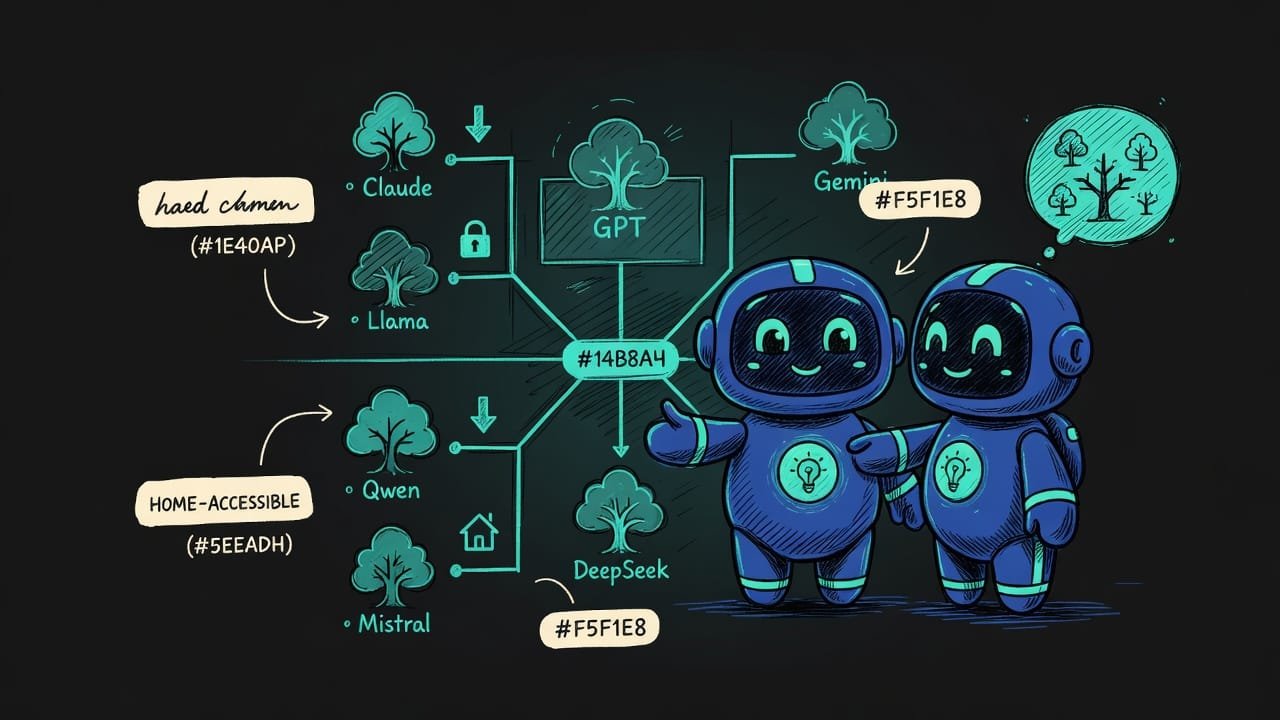
This isn’t one company but a whole camp. Llama (from Meta), Qwen (from Alibaba), Mistral (from France), DeepSeek (from China), and others. The key feature is that you can take them home: run them locally, fine-tune them on your own data, keep everything to yourself. Many are already nipping at the heels of the closed giants. The price of entry is hardware (often a good graphics card) and a bit of technical know-how.
How to pick an AI model for the job: a real-life example
Say you’re a vibecoder, and you’ve got four different tasks lined up this week. Here’s how to reason about it - by the task, not by the hype.
- I need clean code and a long, coherent piece of writing, and precision matters - I look toward Claude.
- I need ready-made integrations and a pile of tutorials at hand - I grab GPT, it has the biggest ecosystem.
- The task is about images, video, or working inside Google services - I try Gemini.
- The data is sensitive, the budget is zero, I’ve got a graphics card and the patience to tinker - I set up an open model locally (Llama, Qwen, or Mistral).
- Not sure - I take two candidates, hand them the exact same request, and compare the answers live.
Want to compare families honestly? Don’t trust someone else’s screenshots - run your task through each one. Here’s a ready-made prompt: drop in your task and send it to two or three models in a row.
Act as an experienced mentor. Help me with the task below.
Task: [describe your task in one or two sentences]
What matters: [for example - precision, speed, long text, analyzing an image]
Do the work, and at the end briefly explain what you based it on.
Common mistakes when picking an AI model
- Chasing “number one in the world.” There’s no single champion: the market split into niches, and the winner depends on your task. A “best model” headline almost always reads as “best on one test.”
- Memorizing version numbers. They go stale within weeks. Remember the family and its temperament, not “such-and-such point such-and-such.”
- Confusing “open” with “free in every way.” Downloading the weights for free - yes. But you pay for hardware and electricity yourself, and some models carry license restrictions.
- Thinking an open model is easy to stand up from scratch. Without a decent graphics card and basic skills, running it locally turns into a slog. For a beginner it’s easier to start with a closed one through a website.
- Trusting a single chart image. A benchmark is a blanket average over thousands of other people’s tasks. Yours may behave completely differently.
- Slapping one model onto everything. An all-rounder is great, no argument. But for a specific task there’s often a handier option. Don’t be afraid to keep two or three in your pocket.
TL;DR - если коротко
- Two camps: closed (website and API only - Claude, GPT, Gemini) and open (download the file, run it yourself - Llama, Qwen, Mistral, DeepSeek).
- Claude from Anthropic - clean text and code, long documents, a calm temperament. GPT from OpenAI - an all-rounder with a giant ecosystem.
- Gemini from Google - multimodality (text, photos, video) and tight integration with Google services.
- Open models - essentially free, they live on your own hardware, and they give you control and privacy. The price of entry is some elbow grease and a graphics card.
- There's no single best model. The market has split into niches - pick for the job, not for the loud name.
- Versions and benchmark numbers go stale within weeks. Remember the families and their temperament, not the specific figures.