What is AI slop: why AI content is so irritating
Where the disgust for “AI texts” comes from - and why the AI isn't the problem at all
Breaking down the AI slop phenomenon: what exactly irritates people about AI content and why that reaction makes perfect sense.
You’ve seen this a thousand times already
“In today’s dynamically changing world, the synergy of innovation and a customer-centric approach opens up new horizons for growth.” Read it? Good. Now tell me what it said. Correct answer: nothing. Zero facts, zero value, zero reasons to keep reading. But on the surface, it sure looks like a text.
Here’s another specimen. A LinkedIn post: “What sets successful entrepreneurs apart? They’re not afraid to fail. Are you ready to step out of your comfort zone? If you agree - share this post.” Three rhetorical questions, one platitude, a rocket emoji, and zero personal story. The author didn’t tell us about a single failure of their own - they didn’t tell us anything at all.
Or a 2,000-word article titled “How to Boost Sales in 2026”: ten sections, tidy subheadings, each one stuffed with generalities about “the importance of analytics” and “deeply understanding your customer”. Not a single number. Not one tool named. Not one case from real practice. Two thousand words, after which you know exactly as much as you did before.
All of this stuff has a name - AI slop AI slop is the dismissive label for mass-produced, low-quality AI-generated content: faceless texts, cookie-cutter images, videos about nothing. Slop literally means pig swill - the stuff you pour into a trough. . Content an AI generated and a human released into the world without putting in a single thought on the way in or a single edit on the way out. And there’s now so much of it that audiences have developed a reflex: see a smooth, faceless text - close it before finishing the first paragraph.
It’s not the technology. It’s the tells
Now for the most important part. Let’s define slop honestly - not as “an AI wrote this”, but through what’s visible in the text itself. Because readers don’t have an AI detector in their heads. What they do have is an emptiness detector - and it never misses.
Slop is recognized by four tells:
- No point of view. The author claims nothing, argues with nothing, risks nothing. The text agrees with everyone in advance. “On the one hand this matters, on the other hand that does.” A weathervane, not a position.
- No specifics. No numbers, no names, no dates, no examples, no titles. Every claim fits a coffee shop, a law firm, and a steel fabrication plant equally well.
- Cliche on cliche. “In today’s world”, “it’s no secret that”, “the key to success”, “take it to the next level”, “level up your skills”. Words the reader’s eyes slide over without registering.
- Structure for show. Five subheadings, bullets, a numbered list, bold highlights - all the packaging of a serious piece. Meanwhile the actual substance fits in one paragraph - and even that one is shaky.
Notice something interesting: a mountain of texts written by actual humans long before AI came along fits this definition perfectly. Corporate “mission statements”. Thesis introductions. Official holiday greetings from management. Slop is a quality category, not a production technology.

Why it irritates you - and why that’s the right reaction
Irritation at slop often gets written off as “Luddism”: people are just scared of new technology, the story goes. It’s a convenient explanation, and a wrong one. The reaction runs deeper and is far more rational.
While you read, your brain is running a background task: “is this worth my time?” And the main signal it hunts for is this: did a real person think here - or am I being fed boilerplate? The signal is assembled from small things: an unexpected detail, a specific number, an admitted mistake, the rough edge in a phrase that only shows up when someone actually did the thing with their own hands.
Trust in content rests on two pillars:
- Specifics. “We raised conversion” - words. “We raised conversion from 1.2 to 2.1 percent in six weeks by swapping the form for a quiz” - experience. Specifics are hard to fake: to write them, you have to have lived them, or at the very least studied them seriously.
- The author’s personal stake. The reader can feel whether the author is risking anything: reputation, position, money. “I believe cold outreach is dead in our niche, and here’s why” - that’s a stake. “Email marketing has its pros and cons” - that’s the absence of one.
Slop fails both checks at once. So the irritation isn’t bias and isn’t snobbery. It’s a perfectly functioning time-waste filter. It protected people from empty texts long before AI, and it keeps protecting them now. It just has to fire a hundred times more often.
Slop is older than AI
An honest caveat, without which the picture comes out skewed: AI didn’t invent slop.
Open any corporate press release from around 2005: “The company, a market leader in innovative solutions, announces a strategic partnership that will take customer service to a whole new level.” A human wrote that. For a salary. Or recall the SEO texts of 2012: “Buy cheap plastic windows Moscow is your right choice, because cheap plastic windows are known for their quality.” Also a human. Also for money.
Meaningless box-ticking content has always existed - wherever a text was needed just “so there’d be one”: for the search engine, for the report, for the publishing plan. What did AI change? One variable: the production cost dropped to zero. An empty text used to cost a copywriter’s fee and a day of waiting. Now it’s thirty seconds and free. The volume of swill grew by orders of magnitude, and a problem that used to live quietly in the basement of search results became visible to everyone.
But the mechanics haven’t changed one bit: then and now, slop is born wherever the person doesn’t care what comes out the other end.
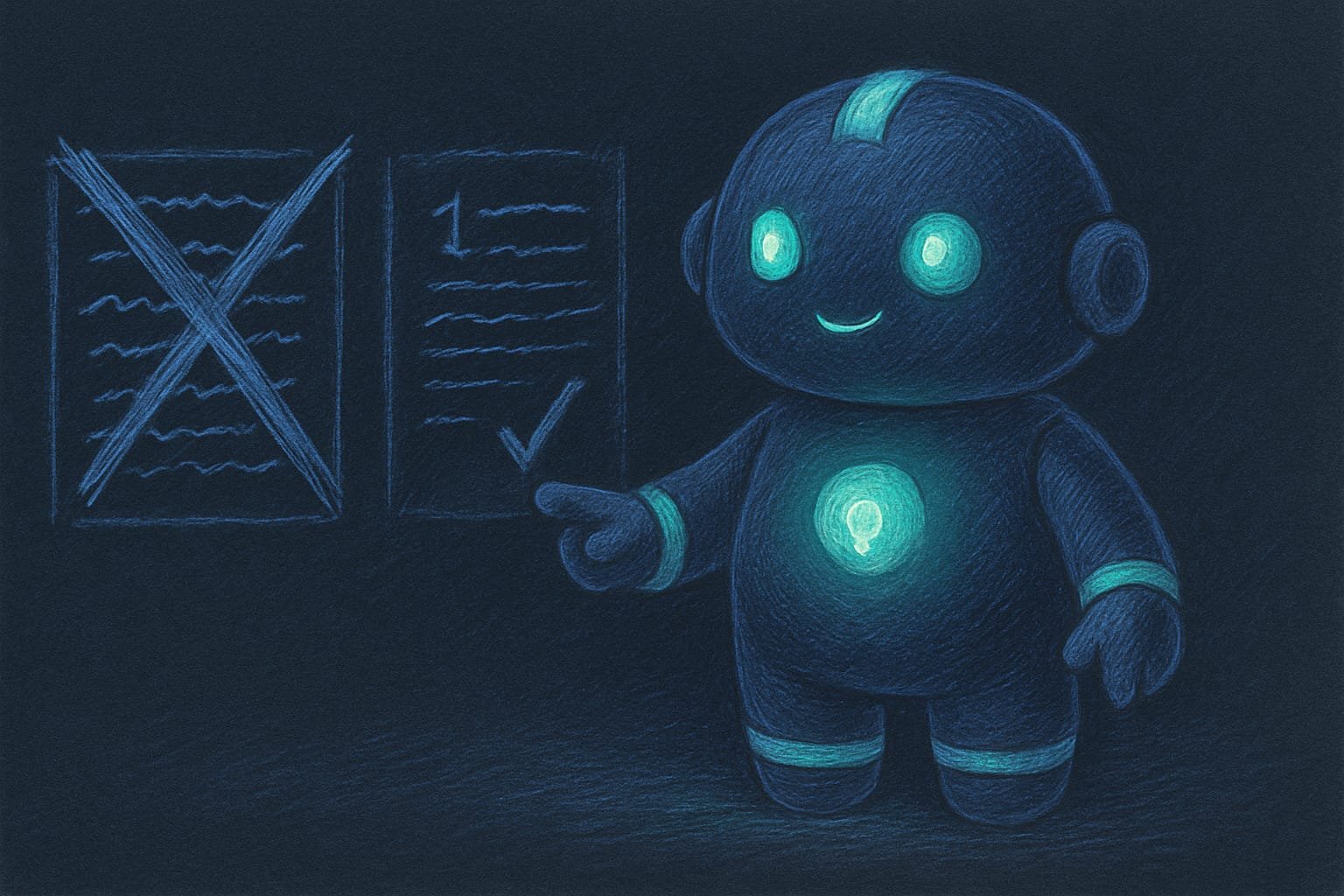
If the technology isn’t to blame - then who is?
The operator. The person who set the task, accepted the result, and hit “publish”.
The same model on the same day serves faceless mush to one user and a precise, useful, living text to another. The model didn’t change between those two requests. The human at the keyboard did: what they put in, what they managed to see in the output, and where they drew the “good enough” line.
This is the central idea of the entire course, and we’re going to take it apart piece by piece: how to spot slop in thirty seconds (including your own), which five operator mistakes produce it, and how to build your AI workflow so that what comes out is work you’re not ashamed of. And work that gets paid for.
TL;DR - если коротко
- AI slop - content an AI generated and a human shipped without editing: faceless, cliched, about nothing.
- Being irritated by slop is a healthy reaction to quality, not bias against the technology.
- Slop gives itself away in seconds: no specifics, no point of view, structure for show.
- The model isn't to blame. The person who put in zero context and zero taste and hit “publish” is.
- Slop is older than AI: press releases and SEO walls of text read this way long before any chatbots. AI just dropped the production cost to zero.