Taste as a skill: how to develop the ability to see the difference
Taste isn't a talent or a gift. It's a trained eye plus the practice of putting things into words
Taste isn't a talent. It's a trained eye plus the practice of articulating what works. How to build it and apply it when working with AI.
What taste actually is
There’s a problem with the word “taste”: it sounds like something innate. Either you’ve got it or you don’t, and if you don’t - tough luck. That’s a convenient myth for people who already have taste, and demotivating nonsense for everyone else.
Let’s set a definition you can actually work with. Taste is the ability to look at a result and articulate exactly what isn’t working in it. Not “something’s off”, but concretely: “the headline promises a case study and there’s no case study in the text”, “the conclusion repeats the introduction in different words”, “this paragraph has three abstractions in a row and not a single fact”.
The difference is fundamental. “Something’s off” is a feeling - you can’t do anything with it. “There’s no case study even though the headline promises one” is a diagnosis, and the action follows from it automatically: add the case study or change the headline.
Operationally, taste is a three-step chain: see the result - articulate what isn’t working - give precise feedback. Every step is trainable. No magic, no genes.
And here’s why it’s the central skill of the course: when you work with AI, taste is literally your quality-control interface. The model can produce options at any speed, but the thing that decides which one to accept and what to tighten in it is your taste. An operator with taste and an operator without it get different classes of product from the same model.

A trained eye - but a deliberate one
The foundation of taste is exposure: an internal base of strong examples your brain automatically compares everything new against. A chef who has tasted two hundred great dishes instantly senses what’s missing in his own. Not because he was born that way - because he has something to compare against.
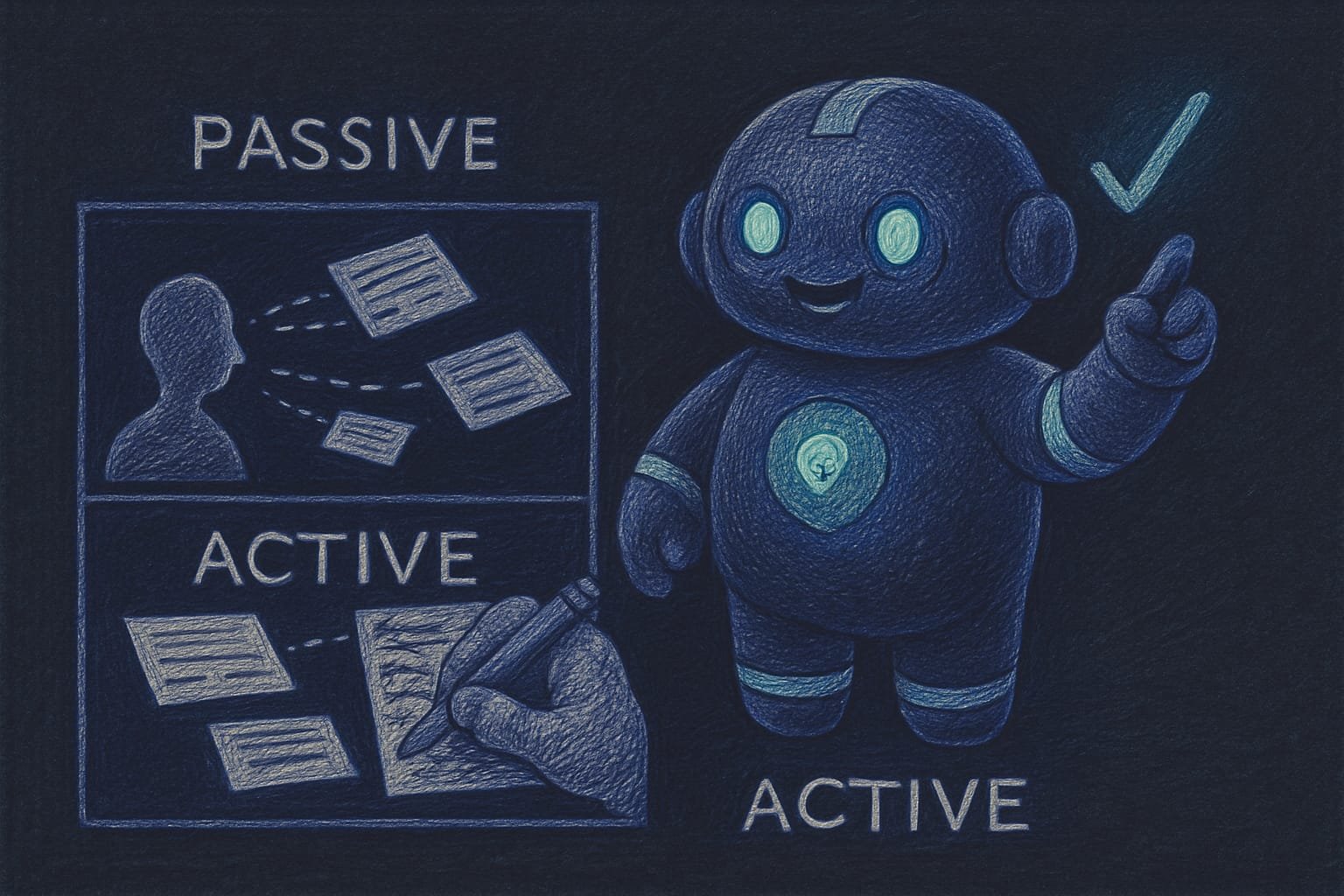
But here’s the crucial nuance that usually gets lost: exposure only works when it’s deliberate. Just scrolling the feed is useless: thousands of pieces of content pass through you every week, and somehow your taste isn’t growing. Because consuming and studying are different processes.
Deliberate exposure looks like this: you pick people and works that are objectively strong in your field - authors whose texts get read to the end; campaigns that delivered results; products that are a pleasure to use - and you dissect them with the question “why does this work?”. Not “it’s pretty”, but the mechanics: what holds the attention? why do you believe this text? what’s done differently from everyone else?
Three dissected examples give you more than three hundred scrolled-past ones. The base builds slower, but you can actually pull things out of it.
The dissection method: 10 minutes per example
Here’s the concrete exercise. Take one strong example from your field - a text, a landing page, a newsletter email, a video ad. Set a timer for ten minutes and answer four questions in writing:
- What did I feel, and where exactly? Find the spot where it got interesting, funny, convincing. Pin the point down: not “the text is engaging” but “it hooked me at the second sentence, where the author names the exact cost of their mistake”.
- Through which technique? A specific number instead of an abstraction. An admitted mistake in the first paragraph. A question headline you itch to answer “no, that’s not right!”. The contrast of a long sentence and a short one. Name the technique in your own words - that matters more than knowing its “official” name.
- What’s done differently from everyone else? What did the author not do that everyone does? Where did they break the template?
- How can I apply this technique in my own work? One line. Without it, the dissection stays theory.
The key requirement: do it in writing. “I like it” in your head is not a dissection. “It works because instead of words about savings the author gives a calculation: 4 hours a week at an ad specialist’s rate is about $900 a month” - that’s a dissection. The written articulation is the very muscle you’re training.
Here’s what a dissection looks like in practice. Say you got hooked by an email from a personal finance tracker. Where it hooked you: the first line - “Last month you spent $47 on subscriptions. Here are three you never used once.” The technique: the email opens not with a greeting and not with company news, but with my number and my problem - personal data instead of “dear customer”. What’s done differently: zero words about the service itself until the very end of the email. How to apply it: open a sales proposal not with “we are a team of professionals” but with a number from the client’s world. Ten minutes - and your library has one more dissected technique that you now see and can reproduce.
Two or three dissections a week - and in a couple of months you’ll be surprised to notice that you see right through the construction of other people’s work and spot the weak points in your own immediately. That’s not an epiphany. That’s the accumulated effect of training.
Where to find material to dissect
So the exercise doesn’t stall on “I don’t know what to dissect”, here are three sources in order of usefulness:
- Things that worked on you personally. An email you read to the end; an ad you clicked; a post that made you subscribe. You’re a live detector: if it worked, there’s a technique inside. Find it.
- The best in your niche. Two or three authors or companies the market measures itself against. Dissect not “their content in general” but specific units: one landing page, one email, one case study.
- Strong examples from other niches. The most underrated source: B2B email techniques transfer beautifully to Telegram channels, and the structure of a good stand-up set transfers to webinars. Someone else’s niche gives you techniques nobody in yours is using yet.
The passive consumption trap
A warning without which the exercise won’t work.
The brain is excellent at faking learning. Subscribing to ten “exemplary” channels, bookmarking forty posts, scrolling through a “best landing pages of the year” roundup - it feels like growth, but it’s actually entertainment. The content passed through you and left nothing behind, because you skipped the one thing that matters: you never articulated why it works.
The check is simple. Recall a strong example you saw this week. Can you explain what makes it strong - in three specific sentences? If yes - your exposure is working. If all you’ve got is “well, it’s cool” - you were consuming, not studying.
The rule: scroll a hundred fewer, dissect three more. The speed at which taste grows is determined by the number of written dissections, not by the volume of stuff viewed.
Taste decides, the rest is mechanics
Let’s close out this chapter. Slop is born from five operator scenarios, and taste closes the deepest of them - the inability to tell “passable” from “strong”. Context can be loaded in two minutes, facts can be checked against a checklist, but if the operator can’t see the difference between an average result and a good one, none of the rest matters: they’ll accept the average and publish it.
The good news is that taste is the most trainable of the “untrainable” skills. Deliberate exposure plus written dissections plus the practice of precise feedback - and months later you have something that, from the outside, looks like instinct.
TL;DR - если коротко
- Taste is the ability to articulate exactly what's missing, not a vague “like it / don't like it”.
- It's built on deliberate exposure: studying strong work and unpacking why it works.
- The working technique: 10 minutes dissecting one good example - “what exactly makes it good?”
- With AI, taste = the ability to say “not it” and explain why. Precise feedback, precise result.
- The trap: consumption without analysis builds no taste. Scrolling past a hundred examples is not the same as dissecting three.