Local or cloud AI agent: what to pick and when
Your own machine or someone else's servers: private and free vs smart and fast - and why a hybrid beats both
Local or cloud AI agent - which one should you pick? Privacy and zero cost vs brains and speed. When your own machine is enough, when you need the cloud, and how to build a hybrid.
Local vs cloud agent, in plain words
You need a helper. There are exactly two ways to get one.
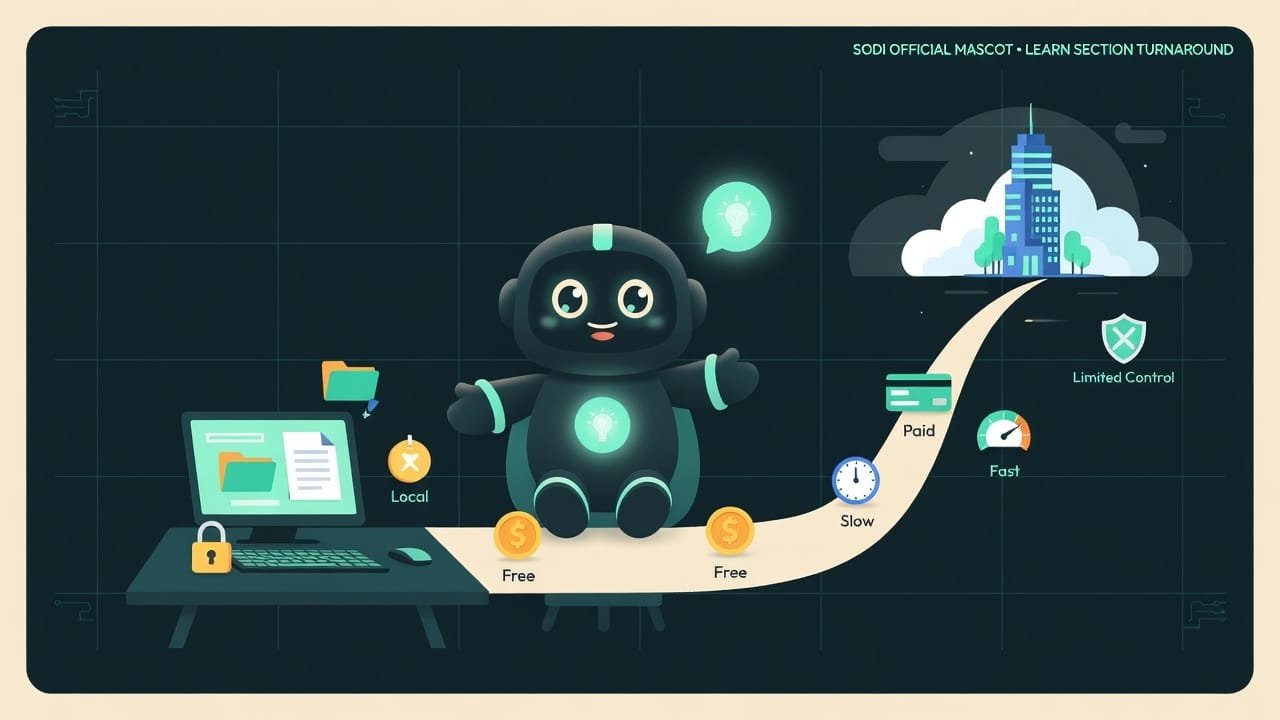
The first - bring a person into your home. They live with you, eat your food, never carry anything out the door, and you don’t pay them a salary. A genius? No. They know what they know, and they work at exactly the speed your kitchen can manage. That’s a local agent - a model that runs right on your own machine A local agent is an AI that runs on your own computer. The model is downloaded onto your machine, your requests go nowhere, and you don't need the internet. .
The second - call the genius hotline. On the other end sits a super-brain: instant answers, knows almost everything. But every call costs money, it’s useless with no connection, and everything you said to it was heard and written down somewhere. That’s a cloud agent - a model on someone else’s servers that you connect to over the internet A cloud agent is an AI that runs on a big provider's servers. You send a request over the internet and get an answer back. You pay for usage, and your data leaves the building. .

Why this choice decides everything
This is the first fork in the road before you launch your own agent. Take the wrong turn and you’ll either overpay - while leaking data somewhere you never meant to - or hit a wall of slowness and dumbness exactly where you needed brains.
- You’ll understand what you’re actually paying for in the cloud - and why “local” is far from always honestly “free.”
- You’ll stop reflexively shoving everything into someone else’s service, including the stuff that should have stayed home.
- You’ll learn to save money: keep the cheap routine on your own machine, spend only on the genuinely hard stuff.
- You’ll be able to explain your choice - to yourself and to a client - instead of guessing blindly.
The most common beginner mistake is thinking there’s only one option. In reality, grown-up agents are almost always hybrid: part of the work at home, part in the cloud. But to build a hybrid, you first have to understand both sides.
Local AI agent: your own helper at home
You download a model onto your machine, and it runs on your hardware. The request never goes to the internet at all: everything is computed in your computer’s memory. No middlemen.
- Privacy. The data physically never leaves the machine. No company reads your requests or drags them off into training.
- Free for real. Download it once, then run it as much as you want. No meter, no monthly charges.
- Works with no internet. A plane, a cabin with no signal, a service outage - the agent doesn't care, it keeps computing.
- No ceiling on usage. Nobody cuts you off mid-task or jacks up the price tomorrow morning.
- Weaker brains. Models that fit on a home machine are noticeably simpler than the top cloud ones - and they trip up more often on hard stuff.
- You need hardware. Without a decent graphics card or a powerful laptop, it'll be slow. Or just won't run at all.
- Slower. Your machine isn't a data center. The answer can crawl, especially on long tasks.
- You're your own admin. Install, update, fix - it's all on you, with nobody to call for help.
Cloud AI agent: a call to the genius hotline
Nothing to download or set up. You send a request over the internet to someone else’s service - a huge model sits there on powerful servers, it thinks and sends back an answer. Your job is just to phrase the question.
- Smarter. The top cloud models are noticeably sharper than anything that could ever fit on a home machine.
- Faster. A data center does the thinking for you - answers come back quickly even on heavy tasks.
- Nothing to set up. Grab an access key and you're working; you need exactly zero hardware.
- Always fresh. The provider updates the model for you - nothing to download.
- Paid. Usually you pay by volume - the more text flying back and forth, the fatter the bill.
- Your data leaves. The request flies across the network and sits for a while on someone else's servers. Not yours.
- You need internet. No connection, no agent. Full stop.
- You're not the boss. They raise the price, swap the model, add a limit - and there's nothing you can do about it.
How to choose local or cloud: the rule of thumb
Don’t guess by mood. Run the task through two questions and it sorts itself out.
- Is it sensitive? Personal, someone else’s, secret - the stuff that can’t leave the building? Then local, no debate.
- Is it hard? Do you need real brains - untangle messy code, write a long piece, reason carefully? Then the cloud will give you a better result.
From there it all falls into place by logic:
- Sensitive and simple (sorting your own private messages into neat buckets) - unambiguously local.
- Non-secret and hard (drafting some creative copy, untangling someone’s public code) - send it to the cloud without hesitation.
- Sensitive and hard - the trickiest case: either you hunt for a beefier model to run locally, or you strip the data of identifiers before sending it to the cloud.
- Non-secret and simple (sorting a list, rewriting a paragraph) - local, no point paying for nonsense.
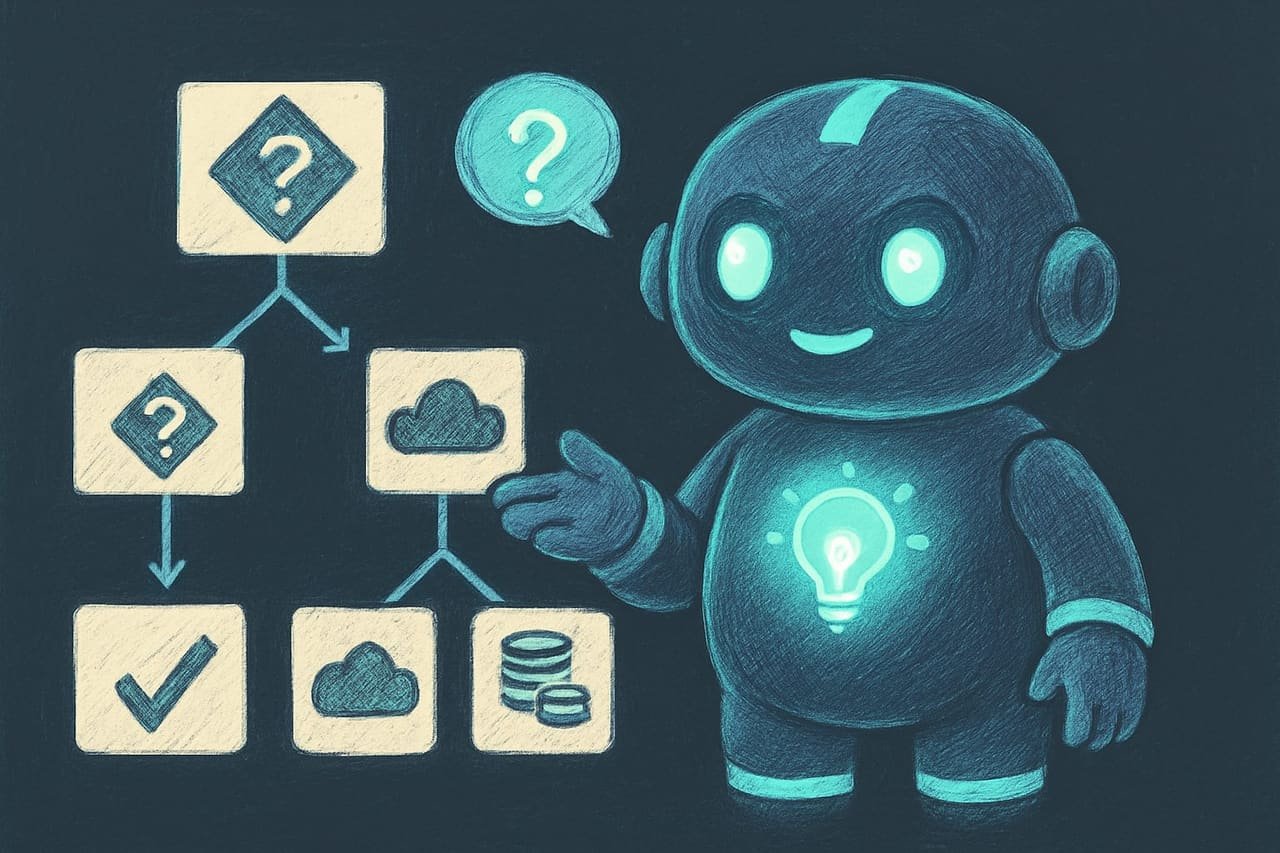
Keeping all this in your head is extra work. Run every new task through a short checklist instead.
- Ask yourself: can this data leave my machine? If not - local, stop thinking.
- Ask: is the task hard, or is it routine? Routine - at home; hard - a candidate for the cloud.
- If the task is hard but the data is sensitive - strip its identifiers, or look for a beefier local model.
- If you’re unsure about privacy - treat the data as sensitive and keep it at home.
- Estimate the cost: a frequent, heavy cloud task racks up the bill fast - it might be cheaper to do it at home.
- Write the decision down in one word - “home” or “cloud” - and move on to the next task.
Hybrid agent: the best of both worlds
The most grown-up move is not to choose one or the other. You run the routine locally (cheap and private), and when it comes to the genuinely hard stuff, the agent knocks on the cloud’s door for brains all by itself.
It’s like an office with a junior staffer and an expensive consultant. The junior (the local model) handles the inbox, sorts things, does the grunt work - fast and free. And you only pull in the consultant (the cloud) for the hard questions worth paying extra for. The junior handles the lion’s share of the tasks. The money only goes to that small slice where you truly need a genius.
Here’s a simple plan for splitting tasks between home and cloud:
- List out every task your agent will do.
- Mark the ones where data can’t be allowed out - those always go local.
- Mark the simple routine (sorting, short rewrites, templated replies) - also local, so you don’t pay.
- Whatever’s left - hard and non-secret - hand to the cloud for the best result.
- Set the agent up to run locally by default and only reach for the cloud on the tasks you flagged as hard.
- Watch the bill and the quality for a week. Too pricey - move more tasks home. Fumbling on the important stuff - move it to the cloud.
Common mistakes when choosing local or cloud
- Shoving everything into the cloud out of habit. Convenient - and you’re overpaying and leaking data where a local model would have done just fine.
- Thinking local is “totally free.” The model itself, sure. But hardware and electricity cost money. You’re just paying differently.
- Expecting miracles from a home model. A small model won’t turn into a genius. Don’t blame it for what it was never built to do - send the hard stuff to the cloud.
- Pouring all your machine’s memory into the model. Leave headroom for the system, or the agent and the whole machine will freeze along with it.
- Sending sensitive stuff to the cloud “real quick.” Once it’s out, you can’t take it back. Think first about whether it even needs to go out at all.
- Believing there’s only one choice. A hybrid almost always wins. Not either-or, but both - matched to the task.
TL;DR - если коротко
- A local agent runs on your own machine: private, free, works with no internet - but the model is weaker and you need the hardware.
- A cloud agent lives on someone else's servers: smarter, faster, always on tap - but you pay for it, and your data leaves the building.
- Rule of thumb: keep the personal and the routine at home, send the hard and the creative to the cloud.
- The bigger the local model, the more RAM and video memory it needs - and the pricier the hardware. Free only on paper.
- A hybrid isn't a watered-down compromise - it's the sum of both strengths: run the routine at home, hand the heavy stuff to the cloud.
- Don't ask which is cooler - ask what am I willing to let leave the house, and how much am I willing to pay for it.