What is vibecoding: how to build websites without code
You describe it in words - the AI writes the code. Not a single line by hand
Vibecoding in plain English: you explain the task in words, and the AI writes the code. What a vibecoder is, how they differ from a programmer, and how to start today.
Vibecoding in plain English
Picture this: you’ve got a personal handyman who can do anything. You say - “I want a shelf right here, blue, for books” - and a minute later the shelf is up. No hammer, no drill, no swearing at a wall anchor. You just said what you wanted. The handyman did it.
That’s exactly what vibecoding is. Only instead of a shelf, it’s a website, an app, or a game. And instead of the handyman, there’s an AI AI (artificial intelligence) is a program that understands ordinary human language and can write code. Claude, ChatGPT, and others, for example. You speak in words, and it turns them into a working program. .
Just a couple of years ago, building a website meant years of cramming programming languages. Weird symbols, brackets, a semicolon in the wrong spot - and bam, nothing works. And now? You describe what you need in words, and the AI writes all the code for you. The whole thing.
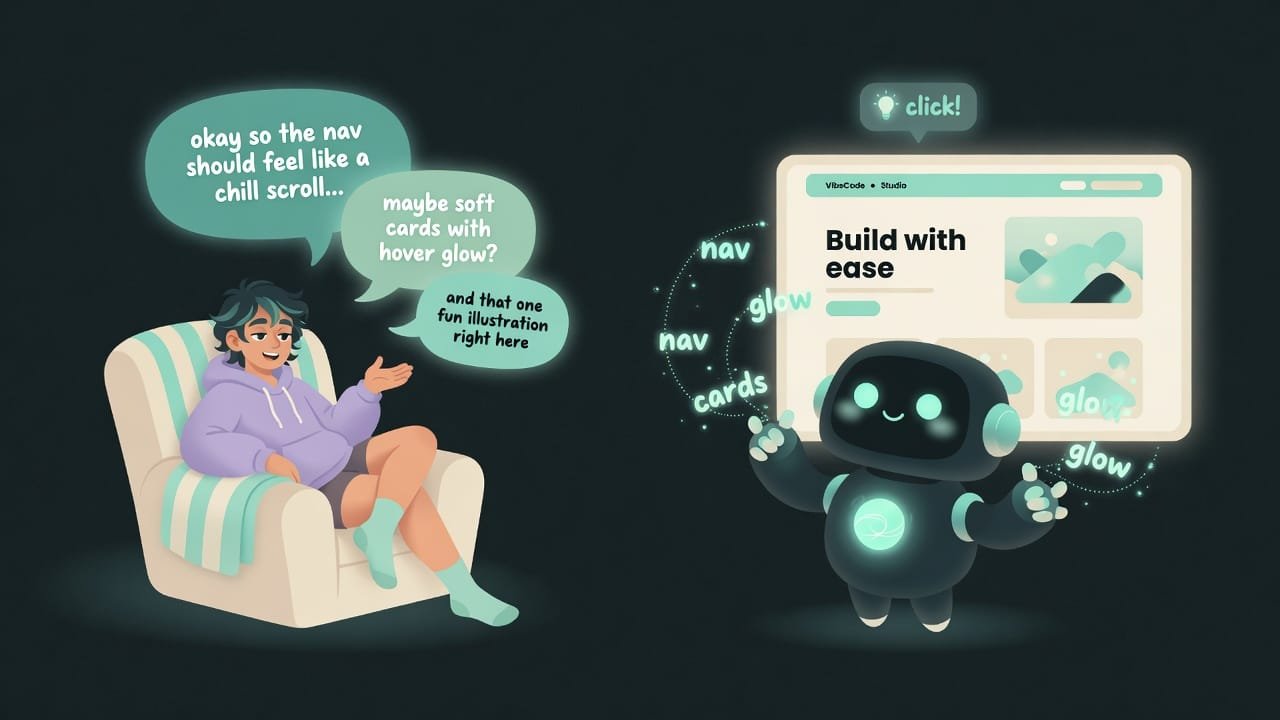
What a vibecoder is and what they can do
A vibecoder A vibecoder is a person who creates websites and programs with the help of AI, describing tasks in words instead of typing code by hand. Their main skill is stating the task clearly and checking the result. is not a programmer. Lock that in right away so you don’t panic prematurely.
A programmer writes the code themselves, letter by letter. A vibecoder works differently. They’re more of a director: they don’t act in the scene themselves - they explain the task to the actor, watch the take, and say “again, but a little more upbeat.” See the difference?
To become a vibecoder, you don’t need to:
- know programming languages;
- understand how code works “under the hood”;
- have a technical education.
You only need three things:
- to explain clearly what you want;
- to look at the result and catch the moment something went wrong;
- to not quit after the first try, but calmly refine the task.
Why you’d want vibecoding
“Okay, fine, the AI writes code. But what’s in it for me?” Fair question. Here’s what:
- you turn an idea into reality - a website, an app, a bot - without hiring an expensive programmer;
- you save time and money: what used to take months and thousands of dollars now gets done in an evening;
- it’s a skill for the future: steering an AI will soon be as ordinary as tapping on your phone;
- you stop depending on “people in the know” - because the person in the know is now you.
An idea for an app pops into your head. In the past it would have stayed a dream in your notes - somewhere between the shopping list and “don’t forget to call Mom.” And now? Now you can start building it tonight, without studying anything beforehand. That alone makes it worth figuring out.
How vibecoding differs from programming
Let’s put the two worlds side by side - it’s clearer that way.
- You write in plain words - in everyday language, like talking to a person.
- Start in minutes: open a chat, describe the idea, get your first result.
- You learn as you go, building real things instead of cramming theory in advance.
- Made a mistake? Just ask the AI to fix it - no need to hunt down the cause yourself.
- You have to learn languages and symbols - years before your first decent result.
- Any little thing breaks - hours of digging into why it doesn't work.
- First a long stretch of theory, and only then does anything actually work.
- You have to find and fix the bug yourself, line by line.
How vibecoding actually works
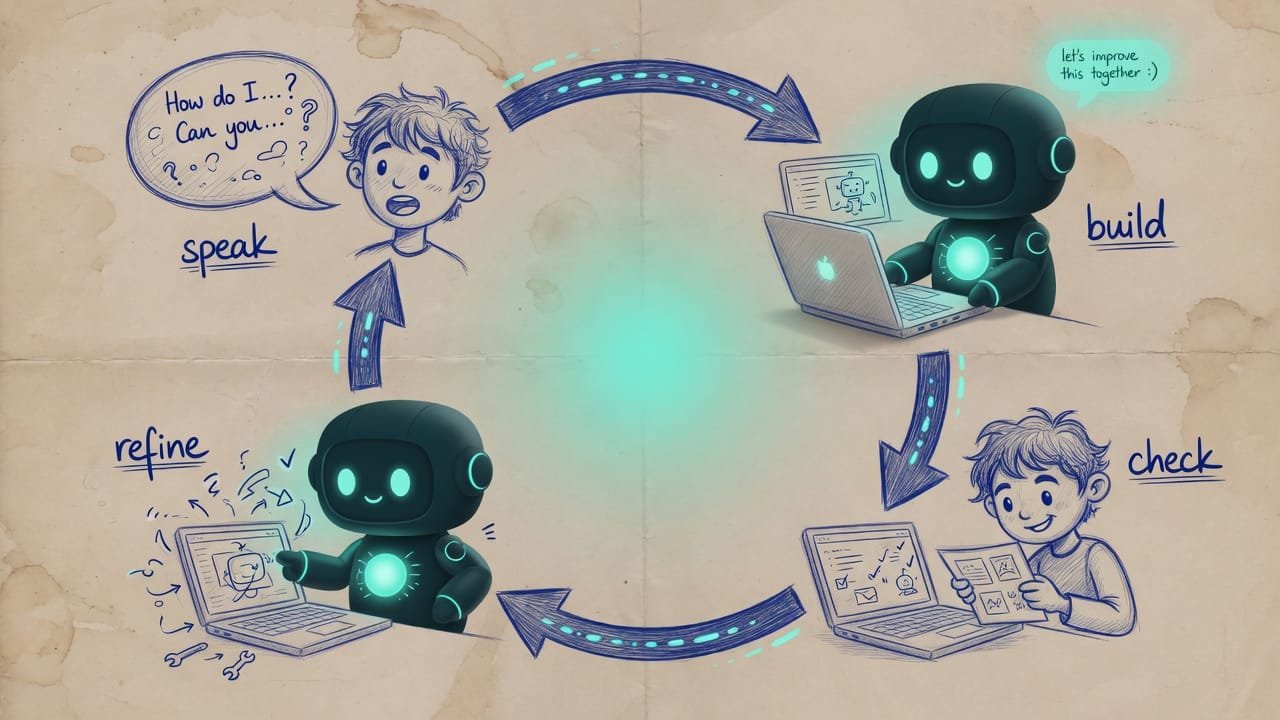
Inside, it’s simpler than it looks. The vibecoding cycle is a conversation:
- You say what you want (“build me a one-page site for my coffee shop”).
- The AI writes the code and shows you the result.
- You look and say what to tweak (“make the logo bigger, add a map”).
- The AI fixes it. And round and round, until it comes out the way you need.
There’s no “press a button - done” here. It’s a conversation. The more precisely you explain and the more closely you watch the result, the faster and better it turns out. That’s the whole secret.
A real-life example: a website in one evening
Say you have a friend. She bakes cakes to order. Clients only find her through DMs on social media - inconvenient, and half of them get lost along the way. You decide: I’ll put together a simple site for her where you can see her work and there’s a “Get in touch” button.
In the past this meant: find a programmer, pay up, wait a week, and nervously chase them for updates. Now you open an AI chat and just type.
Build a simple one-page website for a pastry chef who bakes cakes to order.
I need:
- a nice top section with the name and the line “Handmade cakes to order”
- a gallery of six cake photos (use placeholders for now)
- a “How to order” block with three simple steps
- a big “Message on Telegram” button at the bottom
- warm, cozy colors, clean large fonts
First show me the overall look, then we’ll tweak the details.
A minute later, there’s a finished website in front of you. Not perfect - but already real. From there you just say: “gallery in two columns,” “make the button brown,” “add reviews.” And step by step the site turns into what you had in mind.
Common beginner mistakes in vibecoding
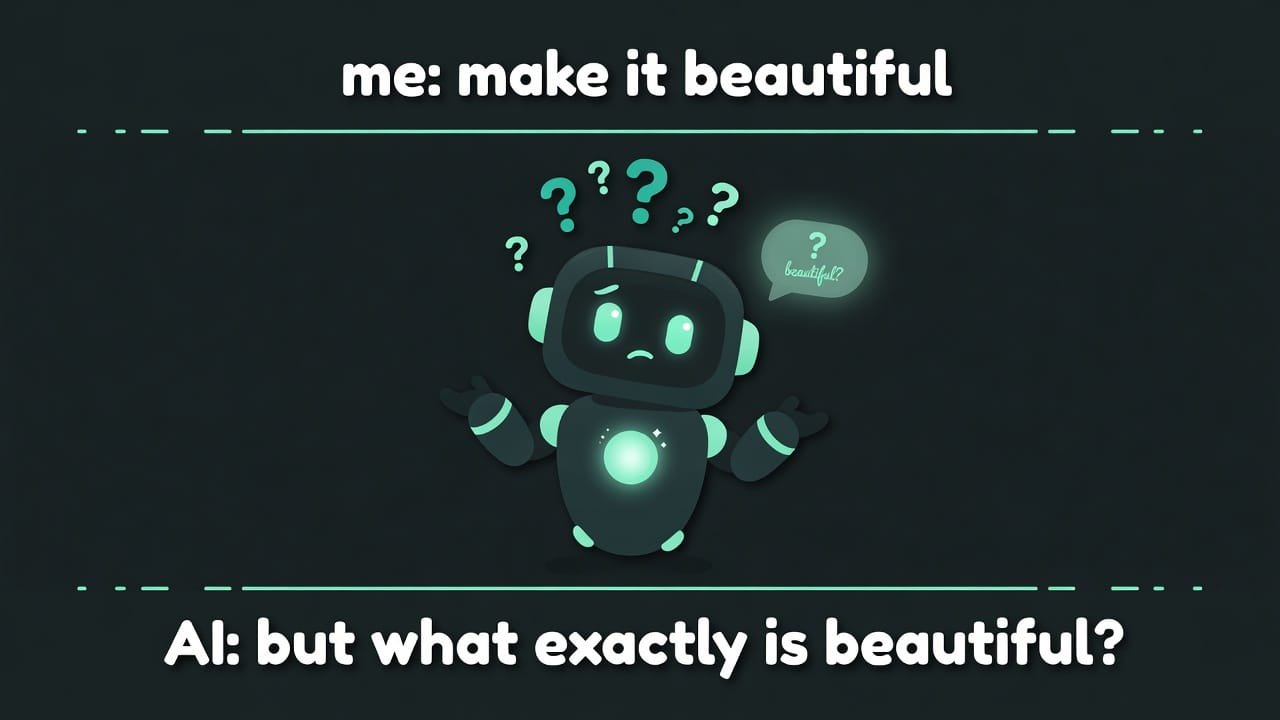
- Expecting the AI to read your mind. It won’t guess what you didn’t say. The more detail you give, the more precise the result.
- Giving up after the first try. The first result is almost never perfect. That’s normal. Tweak and refine - that’s the whole point.
- Writing one big jumble. “Make me a cool app” is way too vague. Break it into pieces: what, for whom, how it should look.
- Being scared that “I’m not a programmer.” Vibecoding is built precisely for non-programmers. You don’t need to know code to steer an AI.
- Not looking at the result carefully. Your job is to notice when it comes out wrong. The AI makes mistakes, and catching them is your superpower.
TL;DR - если коротко
- Vibecoding - you explain what you want in words, and the AI writes the code. You're the director, it's the actor.
- A vibecoder is not a programmer. They state the task clearly and catch the moment when it comes out wrong.
- The key skill isn't code, it's stating the task clearly. Say it clearly, get something useful back.
- Website, app, bot, game - it all gets built without a single line of code by hand.
- It's not a magic “done” button, it's a conversation: the more precisely you explain, the better it turns out.
- The skill grows with practice. You can start your first project tonight.