SEO for beginners: how people will start finding you on Google
Built a site that nobody sees? Let's make search bring people to you - for free
SEO in plain words: why a site without optimization never shows up on Google, how to set up your title, speed and page structure, and climb the search results.
What SEO is, in plain words
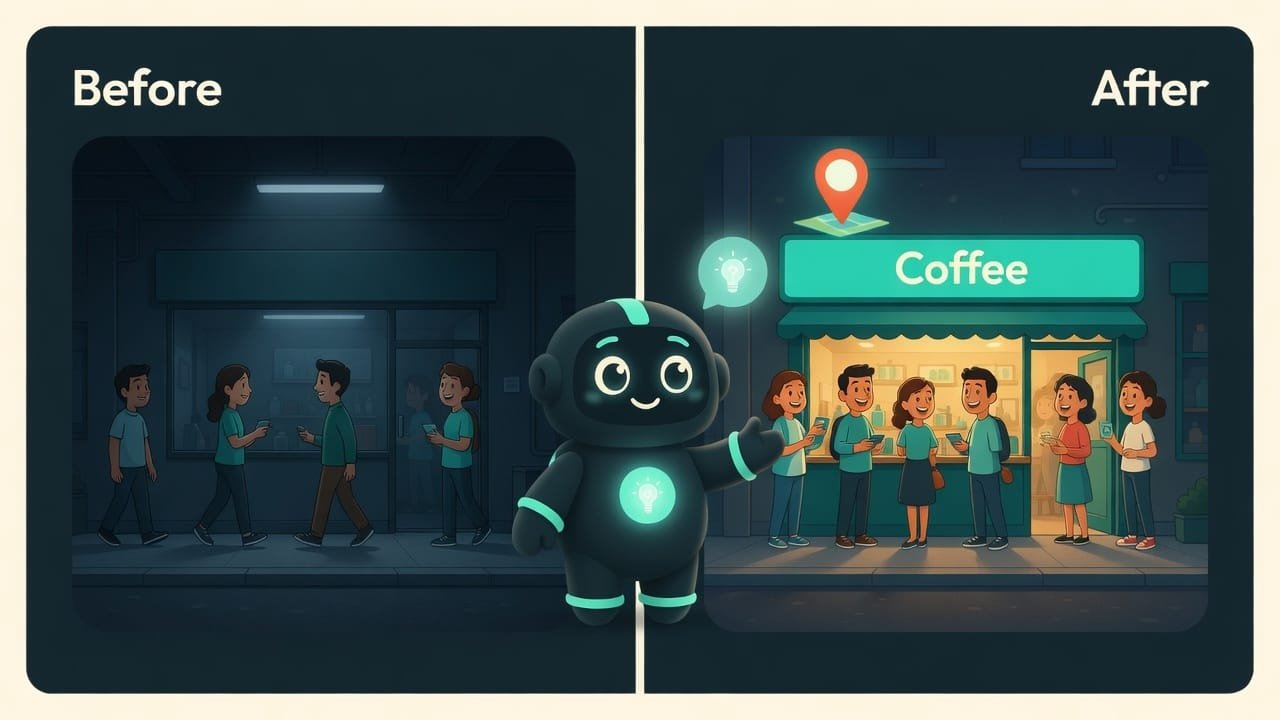
Picture this: you’ve opened the best coffee shop in town. Hand-picked beans, a champion barista, a knockout interior. One catch. The shop is in a basement - no sign, no pin on the map, no little label by the door. People walk by half a meter away and don’t even realize you exist.
That basement with no sign? That’s your site without SEO SEO (Search Engine Optimization) is the work you do so search engines like Google understand your site and show it to the people who are looking for exactly what you've got. . The site can be brilliant. But if a search engine doesn’t understand it and doesn’t show it - as far as the world is concerned, you don’t exist.
SEO is the sign, the pin on the map, and the clear ‘coffee here’ label on the door. You don’t pay for each guest the way you do with ads. You set the site up once so that Google brings you the people who are already searching for exactly what you offer.
Why a vibecoder should understand SEO
You’re a vibecoder. You built a site in an evening - and that’s genuinely cool. But a site without SEO is a flyer tossed into the ocean, after which you sit and wait for the phone to ring. Get the basics of SEO down and you pick up several things at once:
- free traffic from search instead of paying for every click in ads;
- a head start over competitors whose site looks prettier but makes no sense to the search engine;
- protection from the traps that make Google fail to see your site at all;
- the ability to hand an agent a clear task - and it does the SEO for you.
The most heartbreaking thing on the web is a great site that nobody finds. Nine out of ten beginners polish their animations and forget to hang the sign. Don’t be like them.
The three pillars of SEO: how a site gets into search
Technical SEO: can the search engine even see you?
The main rule: fix the technical part first, improve the copy later. Polishing headlines while the robot hasn’t even reached the page is a waste of time.
A search engine is a courier robot. It walks the links, reads pages, and files them into its catalog. Now imagine you accidentally hung up a noindex noindex is a technical note that says ‘don't show this page in search.' It's often set during development and then forgotten after launch - and the site vanishes from the results entirely. tag or blocked everything in robots.txt. The courier turns around right at the door. The site exists, but search shows nothing.
One page - one search query
The second pillar: every page has one clear purpose, aimed at one query a person types. This is called search intent: what the person actually wants when they type a phrase into the box.
A beginner builds a page titled ‘Coffee, pastries, delivery, jobs, brand history, and a bit about the cat.’ Google honestly can’t tell what it’s about. And if it’s unclear, it won’t really show the page for any query at all.
How it should be: the ‘coffee delivery’ page is about delivery. The ‘menu’ page is about the menu. One query - one page. No need to splinter it into infinity. And no piling everything into one heap either.
Title and meta description: your line in the search results
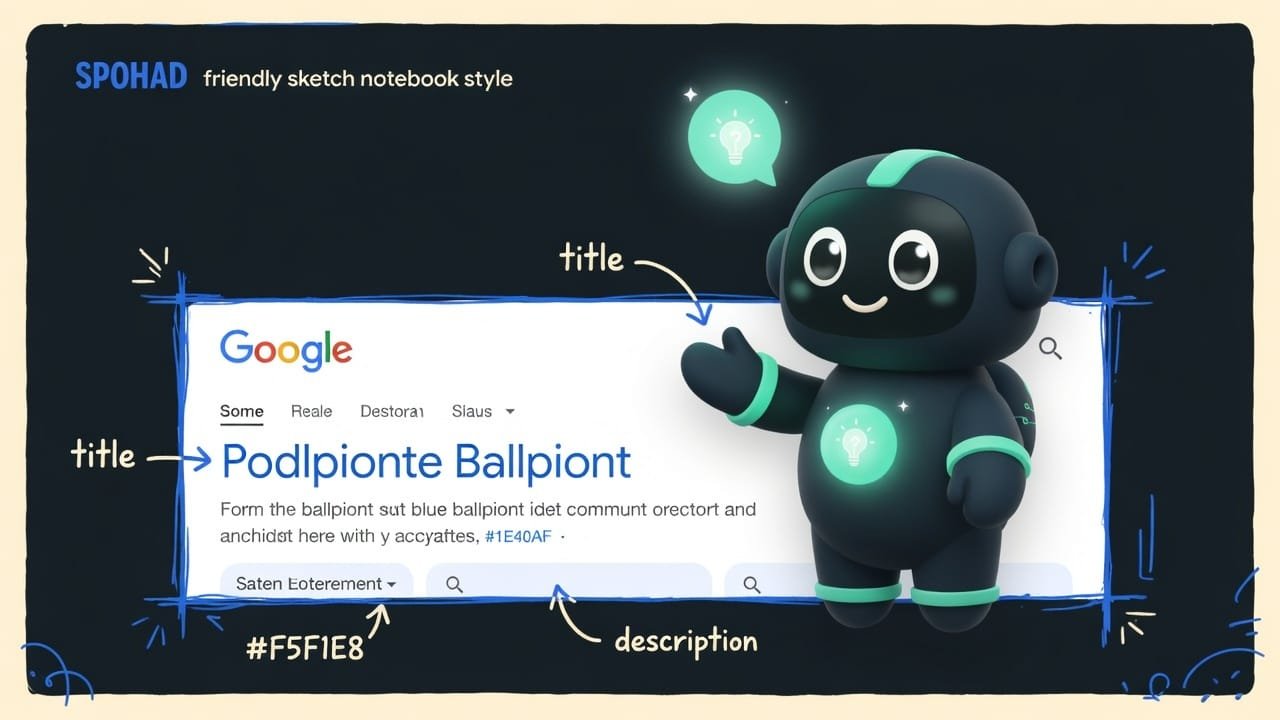
When a site surfaces in search, the person doesn’t see the site itself. They see a blue headline and the text beneath it. That’s the title The title is the page heading Google shows as the blue link in search results and in the browser tab. It's the main text people use to decide whether to click. and the meta description The meta description is the short blurb under the blue link in search. It's your mini ad: what the person gets if they click. . In half a second they decide everything: whether they come to you or to your neighbor.
Working rules from practice:
- Title - roughly 50-60 characters. Put the key word at the front. Write for a human, don’t march keywords in a row.
- Description - roughly 120-160 characters. Honestly say what’s inside, and naturally weave in the topic.
- Headings on the page - exactly one main one (
H1), whileH2andH3reflect the real structure, not sprinkled in ‘to look nicer.‘
A good and a bad title: examples
The title is your sign in search. Here’s how to tell a solid one from a flop at a glance.
- Clear to a human right away: ‘Coffee shop on Arbat - fresh roast.'
- The key word is at the front, not buried at the very tail.
- Every page has its own unique title.
- Length is 50-60 characters - it fits in the results in full.
- A keyword dump: ‘buy coffee coffee delivery coffee cheap coffee.'
- Every page has the same default title - and Google gets confused.
- The key word is at the very end - a person never reads that far.
- A title that runs on for 120 characters and gets cut off mid-word.
Page load speed affects SEO too
Plenty of people don’t realize this: how fast your site loads directly hits both people and your spot in search. Google measures it. And it checks on the phone first - because most people search from a phone.
In short, the search engine looks at three things:
- How fast the main image or text appears (a good target is under 2.5 seconds);
- How fast the site responds to clicks (a response under 200 milliseconds);
- Whether the layout jumps around as the page finishes loading (so annoying: you aim for a button and it scoots away).
A real example: a beautiful site, zero visitors
You built a one-page business-card site for your coffee shop with an agent. Gorgeous, animations, everything zips along. A month goes by - zero people from search. And you’re baffled: the site is great, how can this be?
Here’s what actually happened:
- A leftover
noindexfrom development was still on the site - Google simply didn’t index it. - Every page had the same title - ‘Home’ - giving the search engine nothing to grab onto.
- The 10 MB images took 5 seconds to load - whoever made it that far had time to change their mind.
A vibecoder who gets it wouldn’t have guessed at the cause. They’d have handed the agent the task properly right away:
Check and improve my site’s SEO. Work strictly in this order:
- Technical first. Make sure there’s no noindex anywhere and the site is
open to search engines in robots.txt. All important pages should be
reachable in a couple of clicks from the homepage.
- For each page, set a unique title 50-60 characters long with the key
word at the front, and a description of 120-160 characters that
honestly describes the page content.
- Verify that each page has exactly one main H1 heading, and the
subheadings reflect the real structure.
- Optimize speed: compress heavy images, remove extra scripts.
- At the end, list exactly what you changed and why.

Common SEO mistakes beginners make
- Forgetting to lift the
noindexafter launch. The site stays invisible for months. Check it first thing. - Polishing the copy first, fixing the tech later. Pointless: the search engine never even reached the text.
- One title for the whole site. Google can’t tell which page is about what. Make them unique.
- Stuffing keywords. ‘Coffee coffee buy coffee’ is a spam signal, not a plus. Write for humans.
- Dumping everything onto one page. With no focus, it ranks for no query at all.
- Ignoring speed and phones. A heavy, slow site loses both people and rankings.
- Describing things that aren’t on the page. That’s lying to the search engine. And it always comes out.
TL;DR - если коротко
- SEO is the sign and the address of your shop, for Google. No sign, no address - nobody finds you, even if it's pure gold inside.
- Fix the technical stuff first (can the robot even see your site?), and only then the copy. Do it backwards and you'll polish words nobody ever reads.
- One page - one topic. Don't cram everything plus a cat into a single landing page.
- Title and description are your only ad in the search results. Write for humans, don't line up keywords in a row.
- Slow site - you drop in search. Speed is SEO too, no joke.
- You can hand all this grunt work to an agent - if you give it the task in the right order.