A Team of AI Agents: How to Run Several Agents at Once
One AI is an intern. Five AIs with roles? That's a whole department.
A team of AI agents in plain words: how to run several agents in parallel, hand each one a role, merge their reports into a single result, and not drown in the noise.
What an agent team actually is, in plain words
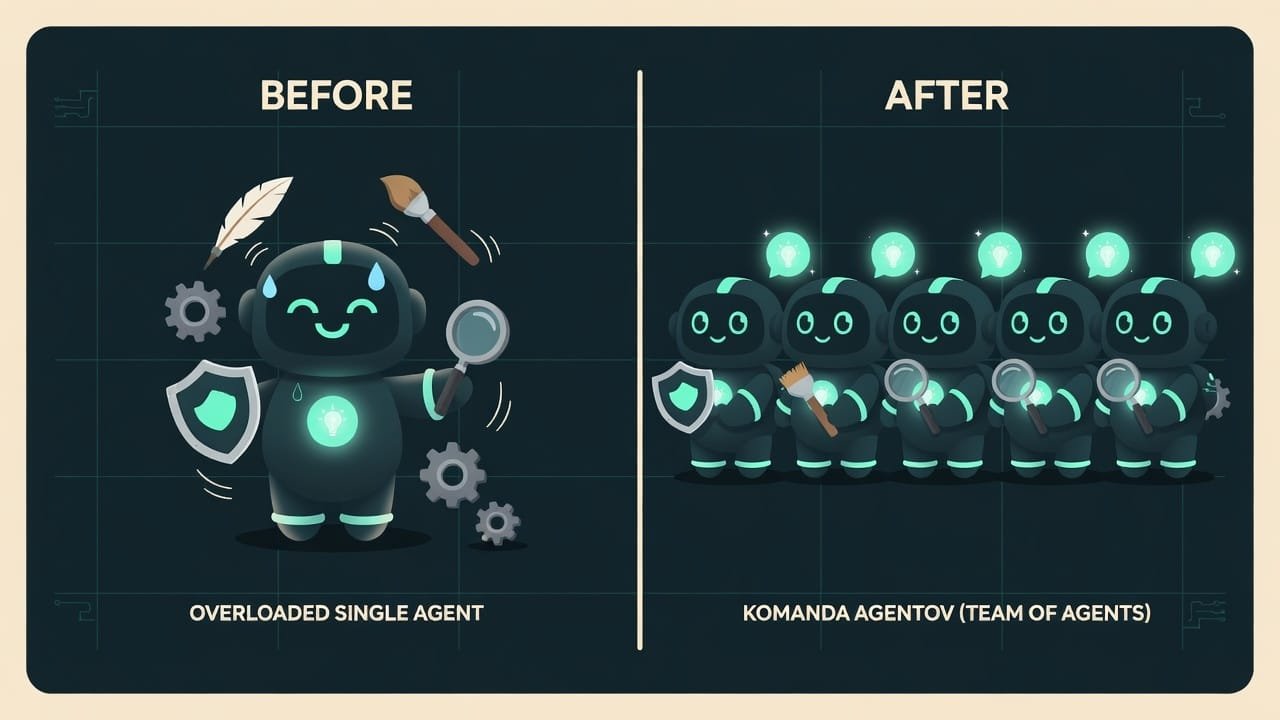
Say you’ve got one very capable intern. Smart, fast, but just one person. You tell them, “check the site before launch,” and they dutifully go off to inspect everything: security, copy, speed. One brain, one thing at a time, a little bit of each. Slow and shallow. What did you expect? They physically can’t look in five directions at once.
Now picture something else. Instead of one intern, you’ve assembled a small department: one security specialist, one copy specialist, one designer. You toss them a single task, and they scatter to check their own piece all at the same time. Half an hour later there are three reports on your desk, and you assemble the big picture from them.
That’s an agent team for you: several AI helpers with different roles that you launch on one task at once.
Why a vibecoder needs several agents
You’re a vibecoder. Sooner or later your tasks will stop fitting inside a single agent. It’s only a matter of time. A website, an app, a long piece of writing: each one is a whole pile of different checks and chunks pulling in different directions. A single agent chokes on that. But once you know how to assemble a team, everything changes:
- the result arrives way faster, because agents work in parallel instead of standing in line behind each other;
- you get depth, because a security specialist will catch what a “generalist” skims right past;
- you see different opinions and the spots where they clash, which is usually the juiciest part;
- you stop dumping a five-person workload on one poor soul.
The difference between “I asked an AI to check the project” and “I assembled an AI team and got three expert reports plus a summary” is the difference between a lone intern and an actual department. And building that department is easier than it sounds.
How Claude assembles a team out of roles
An agent is a role, not just “one more AI”
Agent An agent (in the team sense) is an AI helper with an assigned role: a set of rules about who it is, what it checks, and what it has to hand you at the end. The exact same Claude can be a security engineer or an SEO specialist. It all comes down to the role you give it. isn’t a separate program. It’s the same Claude, handed a role: “you’re a security engineer, your job is hunting for holes, your report is a list of vulnerabilities.” The role lives in a plain text description file (a persona): who the agent is, its rules, its workflow, and what it delivers at the end.
Change the role and the behavior changes. Same brain, different job description. Simple, but it works.
You build the team around the task, not the other way around
Before you launch, you decide who you actually need for this specific task. It’s like putting together a working group: for an online store you call in a security specialist and an SEO specialist; for a landing page, a designer and a copywriter. You don’t invite extras. They just get underfoot.
Agents work in parallel and don’t chat with each other
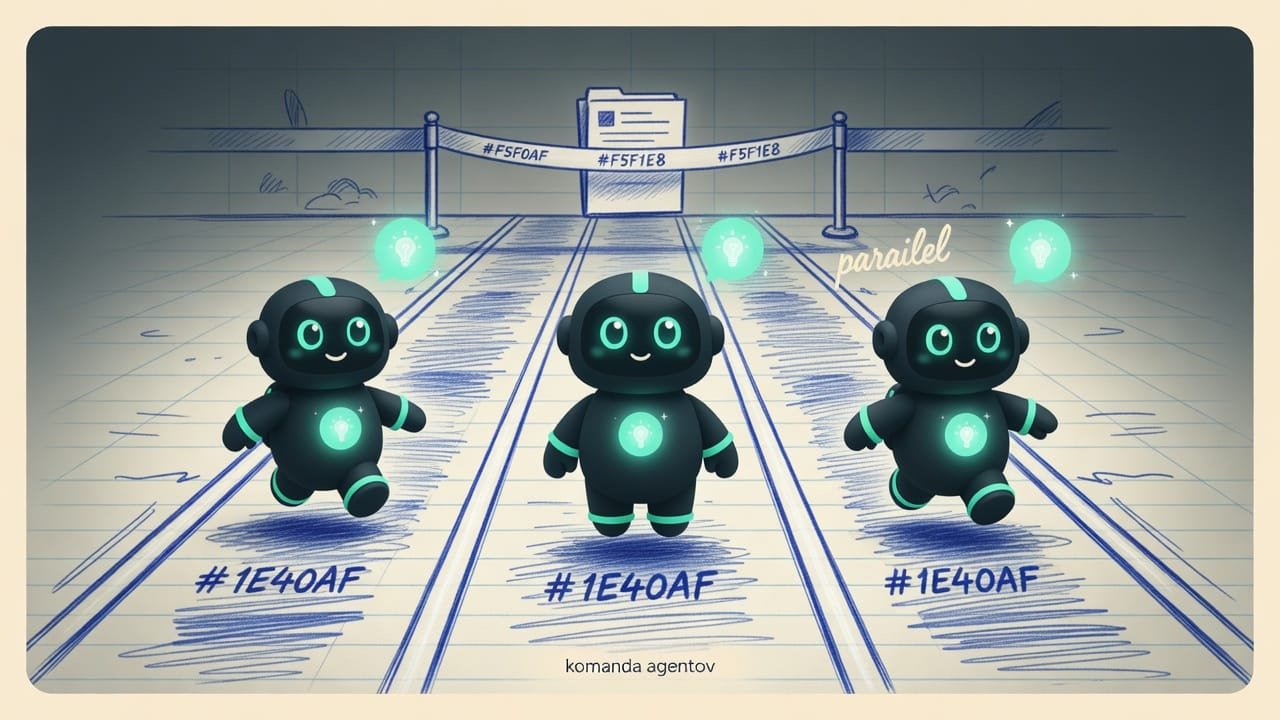
Once the team is assembled, every agent starts at the same time. They work independently, each in its own corner, no negotiating. And that’s a feature, not a bug. They don’t need to sign off on every step the way people do in an endless meeting. Each one just does its thing and brings back a report.
The finale: you pull the findings into one result
At the very end, someone has to merge the three reports into one. That’s you, or a lead “synthesizer” agent. And here’s the valuable part: it isn’t taping the texts together, it’s actually seeing:
- where the agents agree (which means it definitely matters);
- where they disagree (say, the security specialist demands strict protection while the designer wants freedom and beauty), and how to resolve it;
- what next steps all of this points to.
A good agent team versus bot soup
A team is a powerful tool. But only if it’s assembled with your head screwed on right. Here’s how to eyeball the difference between a working department and a noisy circus.
- Every agent has one narrow role, and it's clear what it hands over at the end.
- There are only a few agents (3-5), and each one is genuinely needed for the task.
- Clear boundaries: who touches which chunk, who's responsible for what.
- At the end there's a summary: agreements, conflicts, next steps.
- Ten agents “just in case”, which is expensive and pointless.
- Nobody owns the result, so everyone writes and nothing comes of it.
- Two agents editing the same file and overwriting each other.
- The reports stayed in the chat and nobody merged them, so there's work but no result.
Example: checking an online store before launch
You’ve put together a little online store and you want to check it before launch. You ask one agent, “check everything.” It spends an hour running in circles, spits out a wall of text along the lines of “seems fine, but not sure in spots,” and you realize it didn’t dig deep anywhere. Sound familiar?
Now here’s how a vibecoder who knows teams handles it:
- Picks the two roles needed: a “Security Engineer” and an “SEO Specialist.”
- Gives them one task: check the site before launch.
- They run in parallel: one hunts for security holes, the other for search and copy problems.
- At the end you get two reports plus a summary that shows where they agree and where they disagree.
Here’s a prompt you can start with right now:
Assemble a team of two agents for my task: a security engineer and an SEO specialist.
The task for both: check my online store website before launch.
Rules:
- Run both in parallel, each working in its own role independently.
- The security engineer hunts for vulnerabilities and unsafe spots and returns a list of risks ordered from most to least dangerous.
- The SEO specialist checks the copy, headings, and search visibility and returns a list of improvements.
- At the end, write a single summary: where the conclusions overlap, where they disagree, and what to do first.
- Don’t add more than two agents - I only need these roles.
Common beginner mistakes when working with agents
- Building a “bigger” team. Ten agents aren’t smarter than three, they’re just pricier and noisier. Keep the cap at 5.
- Giving everyone the vague role “do everything.” Then you don’t even need a team, it’s just five identical interns duplicating each other.
- Calling in roles the task doesn’t need. A designer on a security check is pure token waste.
- Letting two agents into one file. They’ll overwrite each other’s edits like two cooks fighting over one pot. Split them across different chunks.
- Forgetting the summary. Three reports with nothing merged is three problems instead of one solution.
- Expecting the agents to sort it out themselves. They run in parallel and don’t chat with each other; you assemble the final picture.
TL;DR - если коротко
- An agent team is several AIs with different roles all chewing on the same task at once. A single agent can't do that.
- You hand each one a narrow role (security, design, copy) instead of telling it to do everything. Like an employee with an actual job title.
- Agents run in parallel and don't chat with each other. You, or a lead agent, pull their findings together at the end.
- Golden rule: five agents max. More than that means pricier, noisier, and dumber.
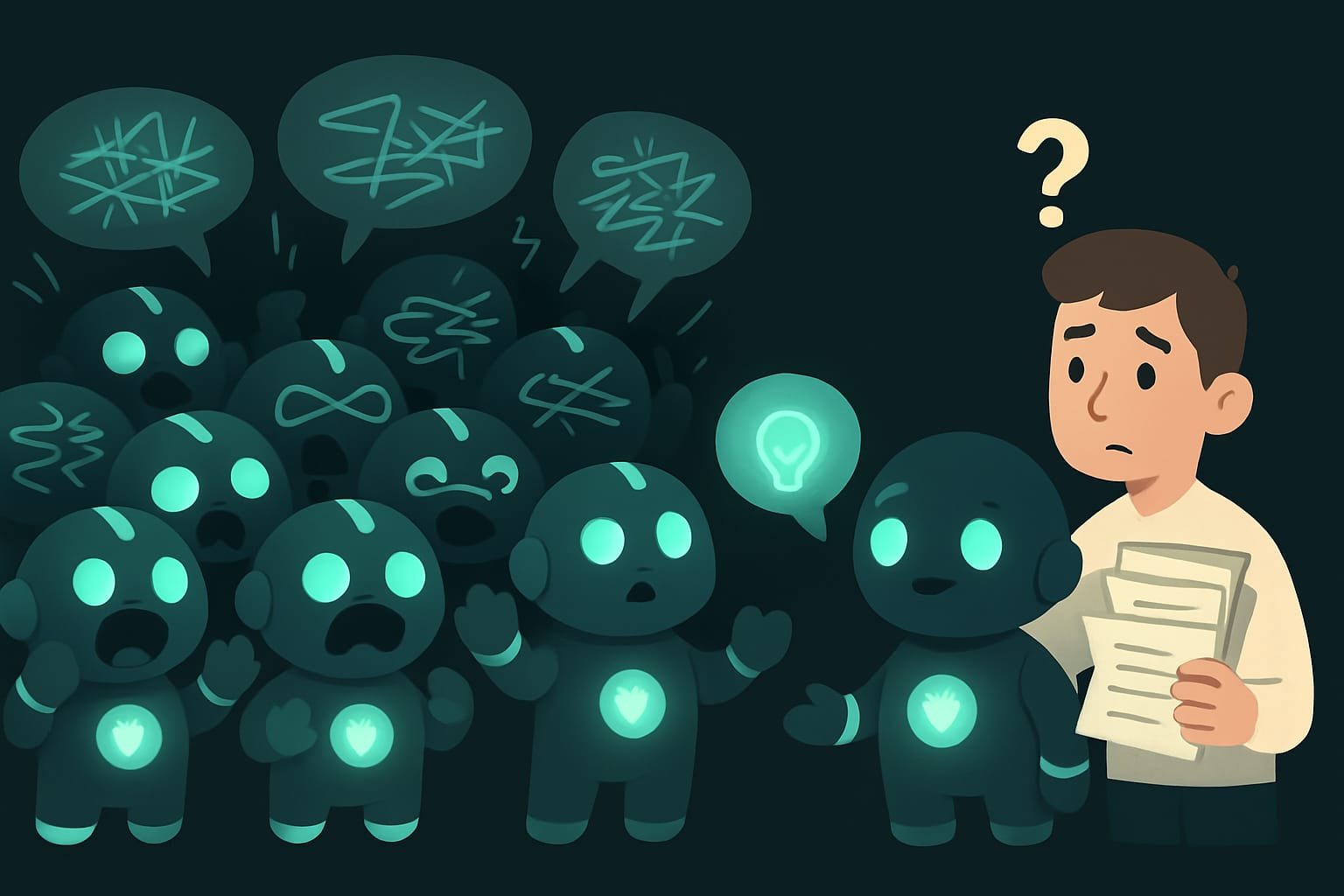
- Without clear boundaries (who touches what), the team turns into bot soup.
- The best part of the summary isn't the shared chorus, it's the spots where the agents disagree. That's where the real decisions hide.